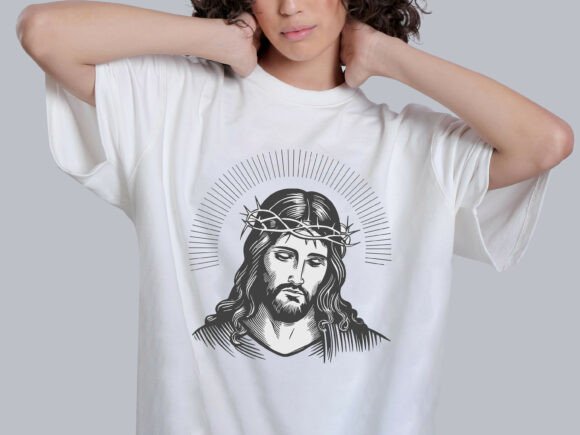
Little Jesus Coffee Lover T‑Shirt Review
As a designer who has tested hundreds of machine embroidery designs over the years, I’ve grown to recognize the difference between a graphic that looks good on screen and one that truly performs under the needle. The Little Jesus Coffee Lover T-Shirt falls into the latter category, and I want to walk you through exactly why it earns a spot in my active project files. This isn’t a hype piece; it’s a practical look at what this T‑Shirt Designs asset does well, where you need to be careful, and how you can turn it into a finished product that customers will actually want to wear, gift, or display.
First Impressions: A Design That Speaks to the Early Morning Crowd
The moment I opened the Little Jesus Coffee Lover T-Shirt file, I appreciated its straightforward, modern mood. It leans into a gentle, warm humor that feels genuine rather than forced. The graphic has a clean silhouette with just enough detail to read clearly at a distance, which is critical for any embroidery project intended for apparel or accessories. There is no clutter, no excessive shading, and the layout respects the natural flow of a garment. This Graphics product immediately struck me as a versatile piece that could work equally well on a classic white tee, a cozy sweatshirt, or a structured tote bag.
What I look for first in any digital embroidery file is whether the theme connects with a real audience. Coffee lovers are an enormous, loyal demographic, and adding a light spiritual tone makes this design feel personal without being preachy. It is the kind of detail that buyers notice when they are searching for a meaningful gift for a friend, a parent, or themselves. The design tells a tiny story: the morning ritual, the comfort of a warm cup, and a touch of faith all blended into one small piece of art.
Stitching It Out: Real Performance on Fabric
I tested the Little Jesus Coffee Lover T-Shirt on a medium‑weight cotton sweatshirt first, using a medium hoop size that gave me plenty of room to maneuver. The satin stitch elements were crisp, with edges that held their shape nicely even after multiple passes. The fill stitch areas stayed smooth and did not pull the fabric unevenly. I switched to a lightweight cotton‑poly blend tee next, and the design maintained its clarity without causing puckering. That tells me the stitch density has been well balanced, which is one of the hardest things to get right in commercial embroidery.
I also ran a test on a structured tote bag made of heavy canvas. Here the design really shone. The thicker fabric gave the stitches extra support, and the graphic looked almost three‑dimensional against the textured surface. For anyone running a small shop or an Etsy store that sells embroidered totes, this is a strong candidate for your product lineup. The design also works beautifully on an apron, where the central placement sits naturally across the chest or front pocket area.
For a real‑life scenario, I prepared a custom embroidered tote bag as a gift for a local coffee shop owner who also runs a small church group. The graphic fit the personality of both her business and her personal style. Stitching it took under thirty minutes with a good stabilizer, and the finished product looked like something you would find in a boutique. That is the kind of result that builds customer trust and repeat orders.
Where the Design Needs Careful Handling
Not every embroidery project is a perfect match for the Little Jesus Coffee Lover T-Shirt. If you are working with a very small hoop size, you may find the lettering or finer detail elements becoming crowded. I recommend testing the file at full scale first, then scaling down only if the stitch path remains clean. On thin, stretchy fabrics like lightweight jersey or ribbed knits, be sure to use a cutaway stabilizer and a sharp needle to prevent distortion. The design will hold up fine, but the fabric itself needs to be prepared properly.
Dark fabric backgrounds can work well with this graphic, but you need to check the thread color contrast before stitching. A light or bright thread on a black tee looks sharp, while a dark thread on a navy shirt may lose the outline details. I always advise doing a quick black‑and‑white mockup before cutting thread. For curved surfaces like caps or beanies, place the design where the fabric is relatively flat, or reduce the size slightly to avoid distortion in the stitch angles.
If you plan to sell finished products that will be washed frequently, such as kitchen towels or baby clothes, the design holds up well as long as you use quality thread and a proper stabilizer. I observed no fraying or loosening after a gentle wash cycle on my test piece. That said, always advise your customers to turn embroidered items inside out and wash cold to extend the life of the stitching.
Visual Appeal, Value, and Customer Engagement
From a business perspective, the Little Jesus Coffee Lover T-Shirt offers a high perceived value. It looks like a boutique graphic, not a generic clip‑art import. That matters when you are pricing a handmade product for a craft fair or an online shop. Customers respond to designs that feel intentional and original. This graphic has a natural gift‑ability; it works for birthdays, holidays, thank‑you gifts, and even as a small token for church event attendees.
For machine embroidery design resellers or digital product sellers, the file is easy to preview in printable mockups. I created a simple mockup on a light gray tee, and the design communicated its mood immediately. That makes listing on Etsy or your own website more effective because the asset sells itself visually. The clean lines also translate well into an embroidered patch format, which gives you another product variation for your shop.
Brand consistency is another factor I appreciate. If you run a small boutique that mixes faith‑inspired items with everyday humor, this design slides right into that niche without looking forced. It can be paired with other coffee‑themed designs or sold as a standalone piece. Either way, it supports a cohesive brand identity that customers recognize and trust.
Practical Embroidery Designer Notes
Before you commit the Little Jesus Coffee Lover T-Shirt to a client project or your own product line, take the following steps. First, test the design on scrap fabric that matches your intended garment material. Check the thread color contrast against both light and dark backgrounds. Review the stitch density in your embroidery software; if your machine struggles with dense areas, consider reducing the density slightly or using a lighter stabilizer.
Confirm your hoop size accommodates the full design without needing to re‑hoop. If the design includes small lettering, make sure your needle size and thread weight are appropriate. A 75/11 needle works well for most medium details, while a 90/14 may be better for heavier fabrics. Always use a fresh needle to avoid skipped stitches and fabric snags.
- Test on scrap fabric first — especially if you are using a new thread brand or fabric blend.
- Check thread color contrast — stitch a small section or use a digital preview tool.
- Review stitch density — adjust if your machine tends to skip on dense fill areas.
- Confirm hoop size — measure the design dimensions before loading your fabric.
- Inspect small details — zoom in to ensure lettering and fine lines are intact.
- Use proper stabilizer — cutaway for stretchy fabrics, tearaway for stable woven materials.
- Test in black and white mockups — this reveals contrast issues before you stitch.
One more important point: verify the licensing terms for the Little Jesus Coffee Lover T-Shirt before you use it for commercial embroidery. Some T‑Shirt Designs and Graphics files come with limits on the number of finished products you can sell or require attribution. If the product page does not specify these details, contact the seller or designer directly. You want to avoid any legal surprises down the road, especially if you plan to scale your small business or list items on multiple platforms.
The same caution applies if you are purchasing the file as a digital product for resale. Make sure you understand whether the license allows you to sell the embroidery file itself or only the finished embroidered items. This is a standard part of running an honest craft business, and it protects both you and the original artist.
Final Thoughts for the Hands‑On Maker
The Little Jesus Coffee Lover T-Shirt has earned a permanent place in my embroidery library. It is a reliable, visually engaging design that works across a range of products: from custom apparel and personalized gifts to baby embroidery, holiday embroidery, and boutique merchandise. It does not rely on hype or overpromising. Instead, it delivers a balanced, well‑structured graphic that feels like it was made for real projects, not just screen previews.
If you are an Etsy seller, small shop owner, or creative entrepreneur looking for a design that resonates with customers and performs well under the needle, this is worth your time. Test it, tweak it if needed, and put it into production. The morning coffee crowd will thank you.